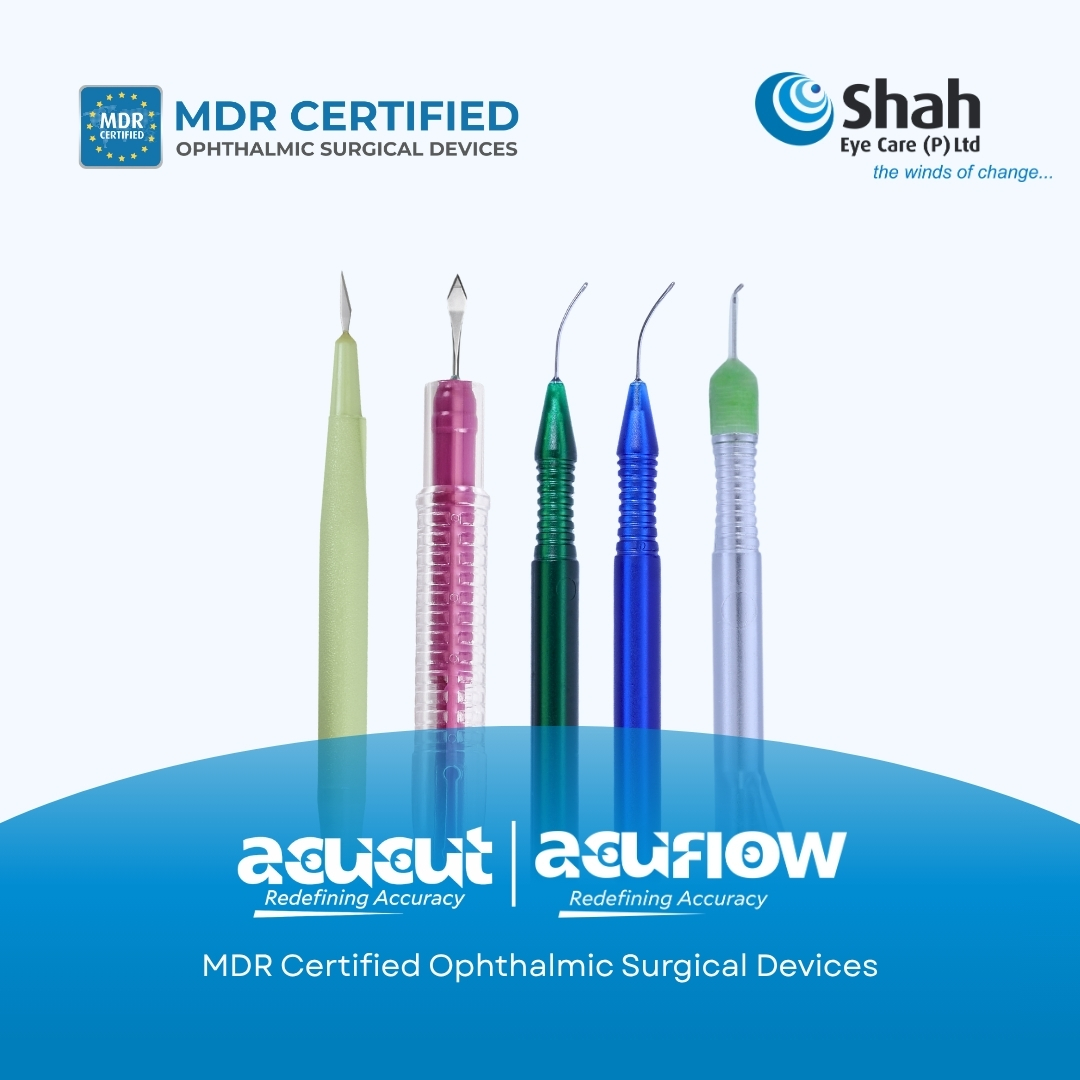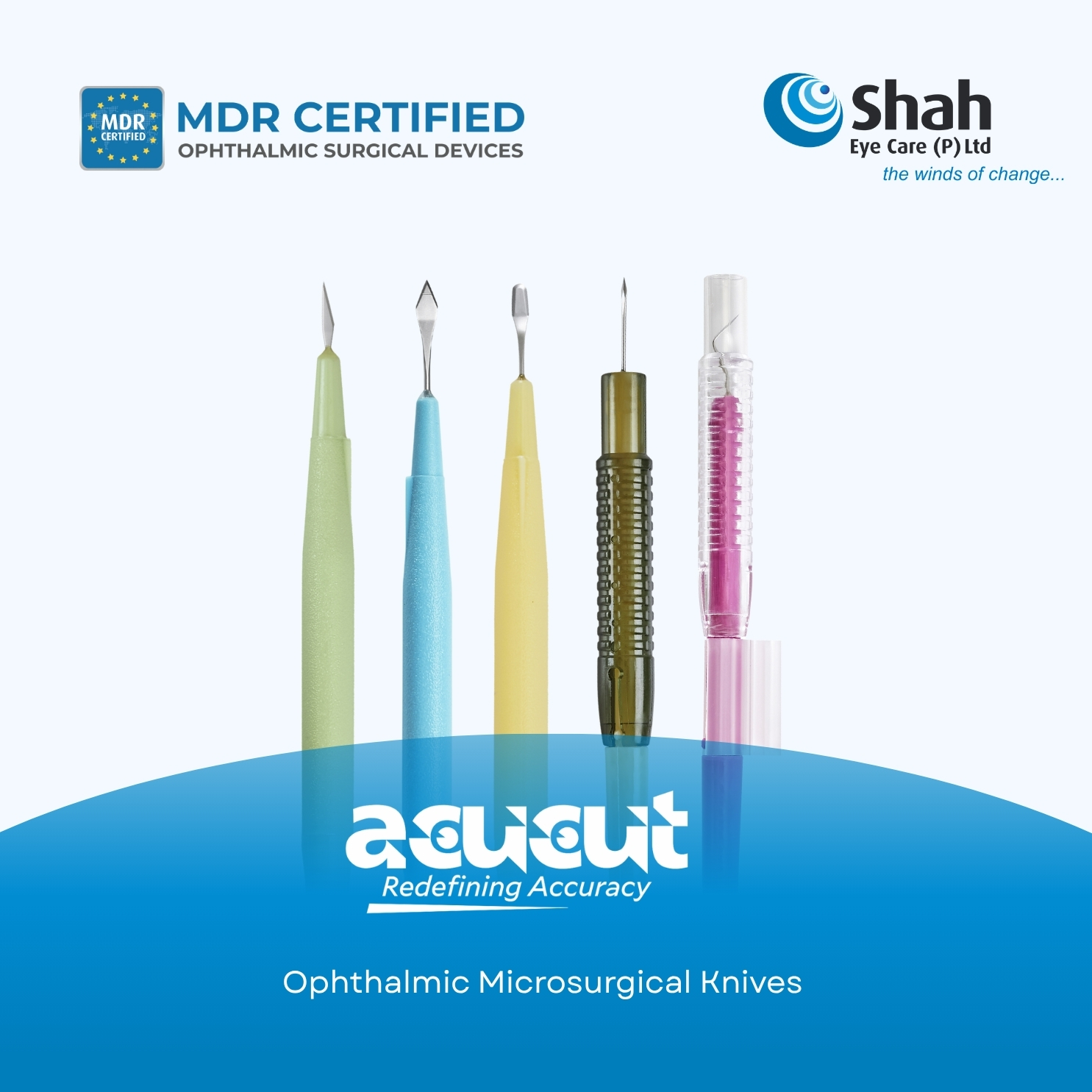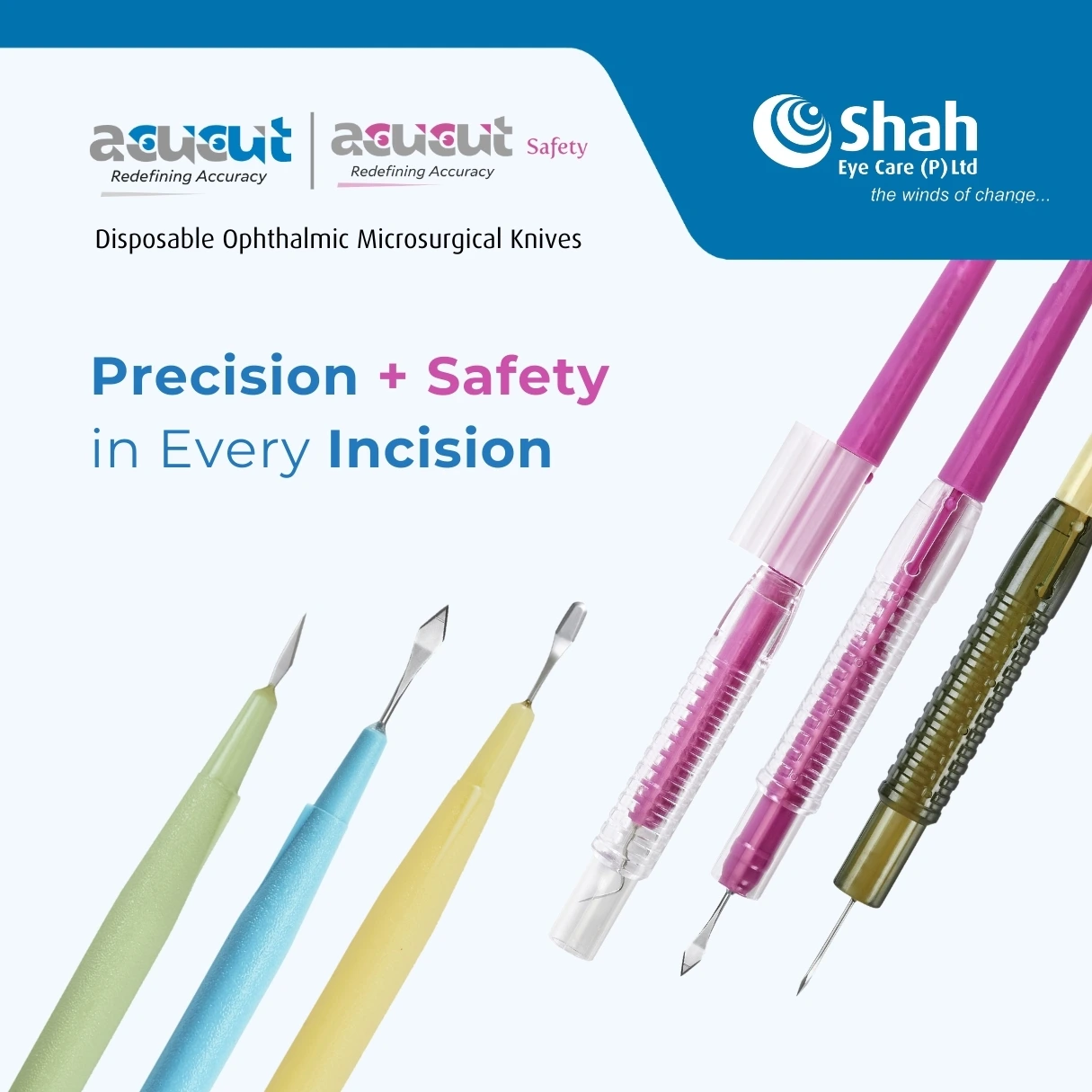
In eye surgery, every incision has a purpose. A single blade cannot meet the needs of all procedures. That is why surgeons use different types of ophthalmic surgical blades, each designed for a specific step in the surgery.
At Shah Eye Care, we manufacture a complete range of ophthalmic blades, and each one plays a different role in cataract, refractive, glaucoma, and vitreoretinal surgeries. Let’s understand how surgeons use these blades in real surgical practice.
1. Side Port / Stab Surgical Blades
Used in cataract and refractive surgery
Side port or stab ophthalmic surgical blades create small side incisions during cataract surgery. These incisions allow the surgeon to introduce supporting instruments without disturbing the main wound.
They help in:
- Smooth instrument entry
- Better chamber control
- Supporting surgical flow
They are also used in refractive surgeries where precise, minimal entry is required.
2. Crescent Blades
Used in pterygium surgery, MSICS, and tunnel formation
Crescent ophthalmic Knives are used for controlled lamellar dissection rather than direct entry.
They are commonly used for:
- Pterygium removal
- Creating scleral and corneal tunnels
These tunnels are important in:
- Phacoemulsification
- Manual Small Incision Cataract Surgery (MSICS)
- Sutureless trabeculectomy
3. Slit (Keratome) Single Bevel Surgical Blades
Used for sclerocorneal centesis in cataract surgery
Surgeons use single bevel slit ophthalmic surgical blades when they prefer a straightforward and controlled incision. These blades allow a clean sclerocorneal centesis entry and are commonly used during cataract surgery.
4. Slit (Keratome) Double Bevel Blades
Used for sclerocorneal centesis in cataract surgery
Double bevel slit ophthalmic surgical blades offer a different incision feel and wound shape. They support smoother tissue entry and balanced wound edges, depending on the surgeon’s technique.
5. Clear Cornea Single Bevel Surgical Blades
Used in cataract surgery
Clear cornea single bevel ophthalmic surgical blades are designed specifically for clear corneal incisions. They help surgeons achieve controlled incision depth and consistent wound size during cataract surgery.
6. Clear Cornea Double Bevel Surgical Blades
Used in cataract surgery
Clear cornea double bevel ophthalmic surgical blades are preferred when a more defined incision structure is required. They support smooth entry and help maintain wound stability during instrument movement.
7. MVR Surgical Blades
Used in vitrectomy and cataract surgery
MVR ophthalmic surgical blades are mainly used in vitrectomy surgery. Their fine, sharp tip allows precise entry into ocular tissues.
They are also used to create side ports during cataract surgery.
8. Paracentesis Surgical Blades
Used in cataract surgery
Paracentesis ophthalmic surgical blades are manufactured for accurate and consistent side port creation. Though small, these incisions play an important role in maintaining anterior chamber stability.
At Shah Eye Care, we focus on manufacturing reliable ophthalmic Knives that support different surgical steps and surgeon preferences across eye care procedures.
Browse our ophthalmic surgical blades: https://shaheyecare.com/acucut/
Connect with us on LinkedIn: https://in.linkedin.com/company/shah-eye-care